Summary
- Fatty liver disease is caused by the accumulation of lipids, especially triacylglycerols
- Disease phenotypes are regulated by the vagal nerve of the central nervous system
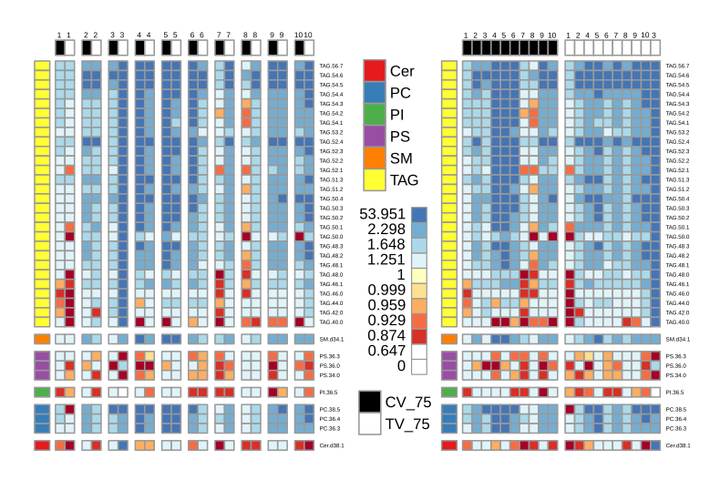
- Characterized the lipid changes associated with vagal innervation in a clinical cohort using a randomized modified sham feeding experiment with human subjects
- The targeted lipidomics assay comprised 350 lipid species, covering 21 lipid classes
- Phospholipids (PC, PE, PS, PG)
- Sphingolipids (SM, Cer)
- Glycerolipids (DG, TG)
- Cholesterylesters
- Lipidomics data deposited to the EMBL-EBI MetaboLights database with the identifier MTBLS4231
LC-MS Method
- Chromatographic separation of lipids was carried out on the UHPLC system equipped with a reversed phase based Accucore C18(2.6-μm,150×2mm) column
- Mobile phase A contained acetonitrile/water (50/50-vol/vol) solution and phase B consisted of acetonitrile/isopropanol/water(10/88/2-vol/vol/vol), both phases containing 10mM ammonium formate and 10% formic acid. A gradient of mobile phase B was applied to ensure optimal separation of lipids
- MS scan range set to 250–1200m/z for both +/- ionization mode
- Fixed collision energy mode set to 35% and inclusion list was used to obtain tandem MS spectra
- Data analysis was performed with TraceFinder software